
Oh, Those Americans!

Instant Quiz

Can you correct the error in the sentence below? Scroll to the bottom of today’s post for the answer.  

After five days at a first-class hotel, we were reluctant to leave our luxuriant surroundings.

____________________________________________________________

Sometimes we Americans are blamed for two annoying nonstandard English usages. One is ain’t, and the second is using literally to mean “figuratively”: 

I ain’t got nothing left to say.
Joe literally laughed his head off.

Today’s post has two purposes. One is to correct the historical record. The second is to tell you about a resource you can use to research these questions yourself: the Oxford English Dictionary.

Let’s start with ain’t, a nonstandard word that could cause you to be passed over for a job or a promotion. Please don’t use it in a business setting!

But its history might surprise you. Ain’t was standard English from around 1600 to 1800. It  used to be so respectable that it appeared in letters written by Jonathan Swift, Lord Byron, Henry Fielding, and George Eliot.

Literally was first used in the sense of figuratively in a British novel published in 1769: it’s hardly an example of twenty-first century decay.

The Oxford English Dictionary is a famous historical dictionary that traces the appearance and development of our English lexicon. When you look up a word (such as ain’t), you’ll get both the definition and the year it first appeared in print.

If the meaning changes over time, you’ll get the year that new definition first appeared. Quotations and sources are included to show how the word is used.

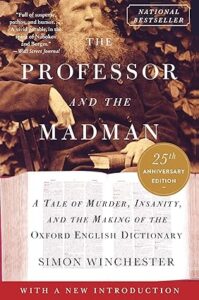
If you’re an avid reader, I guarantee that you’ll enjoy Simon Winchester’s book The Professor and the Madman. Or you might want to watch the 2019 film, starring Mel Gibson and Sean Penn. (Whichever one you choose, prepare to be shocked!)

____________________________________________________________

Short Pencil Point Deviant Art ok

Instant Quiz ANSWER

Luxuriant is the wrong word for today’s Quiz sentence. It means “thick” – luxuriant hair  or plantings, for example.

The word you need today is luxurious (meaning “lavish” and “expensive”).

After five days at a first-class hotel, we were reluctant to leave our luxurious surroundings.  CORRECT


What Your English Teacher Didn’t Tell You is available in paperback and Kindle formats from Amazon.com and other online booksellers.
“A useful resource for both students and professionals” – Jena L. Hawk, Ph.D., Mississippi Gulf Coast Community College

“Personable and readable…Jean knows her subject forwards and backwards.” – Adair Lara, author of Hold Me Close, Let Me Go

Share

Don’t Let Them Confuse You!

I thought I’d heard all of the urban legends and other mistaken ideas about English. But I was wrong! Here’s a new one to watch for.

More and more people are insisting that everyday English is imprecise. If you want to be understood, you need to use formal English. Wrong!

There are two problems here. First, English is an amazingly powerful language. You can have razor-sharp precision in a sentence even with simple English:

All three judges voted for Sarah’s essay.
This morning the sun came up at 7:17.
I’m going to vote by mail again this year.

The second problem is that formal English is hard to pin down. Obviously the Gettysburg Address is formal English. But Lincoln didn’t have to use expressions like “four score and seven years ago” to be precisely understood. “Eighty-seven years” isn’t as poetic, but it conveys the same information.

Here’s another example: “In anticipation of heavy turnout, the election committee scheduled three extra days for early voting.” That’s pretty formal writing!

But this version is just as precise: “The election committee expects heavy turnout. They scheduled three extra days for early voting.” It’s not quite as formal, but all the information is the same.

Bottom line: don’t believe everything you’re told about English – and don’t be afraid to write plainly and naturally.

A confused smiley face

Share

A Lesson from Poet John Keats

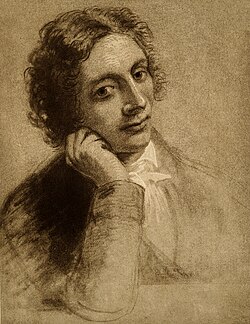
Back in 1819, the British poet John Keats wrote of instead of have in a letter. Go to this link (Full text of “The Letters Of John Keats Volume Ii”) to read the letter: “Had I known of your illness I should not of written in such sorry phrase in my first letter.”

It’s the same mistake students make today. Here’s the correct version: “Had I known of your illness I should not of written in such sorry phrase in my first letter.:

There’s a useful lesson here: don’t assume that every mistake is a sign that language skills are deteriorating. Writers have always made mistakes – and always will.

There’s one difference, however: nowadays we have superb grammar checkers and spellcheckers. There’s no excuse for careless writing mistakes anymore.

Poet John Keats after J. Severn Wiki

Poet John Keats by J. Severn

Share

Ten Writing Secrets You Didn’t Hear about In School

I’ve been using these writing secrets for years! Try them yourself. 

  1. Be careful with the word being. It’s a useful word — but it can gum up a sentence. “Because” is a much better choice than “being that,” for example.
  2. You can start sentences with and, but, and because. There’s never been a rule against it. Abraham Lincoln did it in the Gettysburg Address. Shakespeare did it.
    Every English-language book in your bookcase has sentences starting with butand, and because.
  3. Don’t be afraid of the singular they; “If someone needs a ticket, they can get one at the office.” The singular they dates back to 1375. Chaucer, Caxton, and Shakespeare used it; so did Jane Austen (75 times in Pride and Prejudice).
    We all use the singular they all the time. (If you’re nervous about it, read this from NPR: https://n.pr/1PXdiGW)
  4. Professional writers often end their paragraphs with a climax (“That was my favorite birthday gift”) or a closure sentence that repeats the point of the paragraph. (“I still think about that gift.”)
    Don’t overdo it, but it’s a great way to add polish to your writing.
  5. Never use “last but not least.” The pros use a climax phrase (such as best of all, most important, most seriously) to introduce their final supporting idea.
  6. Don’t use quotation marks for emphasis (He was my “favorite” teacher). The pros don’t do it, and you shouldn’t either.
  7. Don’t underline, ever. Add emphasis with italics or bold formatting.
  8. Always choose the simplest word. Nobody is impressed if you say, “The fluid supply in my writing implement is exhausted” when what you mean is “My pen is out of ink.”
    Impress people with your critical thinking and your knowledge, not fancy words.
  9. Delete words that don’t add anything useful to a sentence. “Their respective specialties” means exactly the same thing as “their specialties.”
    You wouldn’t put up with a lazy employee, and you shouldn’t tolerate lazy words.
  10. Don’t waste your time learning formal grammar. You learned most of the grammar you’ll ever need before you entered first grade. (Doubt me? If you didn’t know grammar, how could you have read this post?)

A file cabinet with a folder of secrets

Share

Three Words I Never Use

Here they are: restive, enervated, and fulsome. (Were you expecting naughty words? Sorry to disappoint you!)

There’s nothing wrong with these words, of course. But they’re in transition right now  and developing new meanings. How will you (or your readers, if you’re a writer) know which meaning was intended?

It might be wise to avoid this trio of words altogether: restive, enervate, and fulsome.

“Restive” originally meant restless, fidgety, or out of control.  But because it contains the word “rest,” some people think it means restful.

“Enervated” originally meant drained or exhausted. But it sounds a little like “energetic,” and that meaning has caught on.

“Fulsome” originally meant exaggerated praise. But now it’s often used to mean sincere praise.

It’s fun to learn new words! But be careful when using an unfamiliar word. Make sure you know the current meaning.

Confused cartoon figure

Share

Advice to Ignore

In the last couple of weeks I’ve come across the same bad writing advice twice. What’s really interesting is that the contexts were different.

Here’s the bad advice:

1. You should avoid semicolons because they don’t indicate the relationship between the two ideas. (This is Michael Kinsley’s position) 

2.  You should avoid dashes because they don’t indicate the relationship between the two ideas. (This is Lionel Shriver’s position.)

Bosh! Our brains are perfectly capable of figuring out those relationships. In fact our brains enjoy doing that. It’s more active and interesting than just imbibing information.

Take a look at these two sentences:

We enjoyed our visit; Susan is a wonderful hostess.

Raindrops began to fall – we needed to hurry.

No one could miss the connections between those pairs of ideas. We enjoyed the visit because Susan is such a good hostess. We had to hurry because we didn’t want to get wet.

Why not simply use “because,” then? The answer is sentence variety. You don’t want to keep using the same sentence pattern over and over – a string of because sentences, for example.

A red pencil and the words right and wrong

Share

Because I Said So

My husband has been the garden writer for a newspaper for 32 years. His first editor was a pleasant young woman who — unfortunately — had some odd ideas about writing. One of them was her belief that because was a bad word.

Share

Is It “I” or “Me”?

It’s surprising but true – the everyday words I and me cause endless confusion.

Although it’s easy to use these two words correctly, our English grammar insists on making them seem difficult. I just came across this hopelessly complicated explanation from Grammarly:

Use me when you’re talking about an action done totowardforwith, or without you. And use whenever you’re the one doing the action.

Do you find this explanation helpful? I don’t. There’s a better way: just shorten the sentence.

Jill invited Carl and I/me to her party.

Get rid of Carl – just for a minute. He can still come to the party!

Jill invited me to  her party.

It’s obvious, isn’t it? Jill invited me to her party. So: Jill invited Carl and me to  her party.

Let’s try another one:

Carl and I/me enjoyed Jill’s party.

Get rid of Carl for just a moment:

I enjoyed the party.

Again, it’s obvious: I enjoyed Jill’s party. So: Carl and I enjoyed Jill’s party.

Use your language experience to solve these problems – and stay away from the grammar gobbledygook. You can download a free handout about pronouns at .

A dog wearing a party hat

Share

Maybe It Doesn’t Matter!

I was taught not to capitalize prepositions (in, by, for, with, to) in a title. Here’s how I would write the title of Margaret Mitchell’s famous novel: Gone with the Wind.

But I just found out that the Chicago Manual of Style has an exception. If you’re using a phrasal verb, you can capitalize the preposition (which – the experts say – might actually be an adverb. Don’t you just love grammar? Sigh).

A phrasal verb has two words that go together: fall down and pick up are examples. Gone with is not a phrasal verb. That’s why you don’t capitalize with in Gone with the Wind.

The two words in hang on really do go together. So we have this song title: “Let’s Hang On to What We’ve Got.”

Watch out is another phrasal verb. Eric Clapton has a song called “Watch Out for Lucy.” You should capitalize out.

But what about watch over? I don’t think those two words go together. They don’t sound like a unit to me.

There’s a gorgeous Gershwin song called “Someone to Watch over Me.” Technically you shouldn’t capitalize “over.” And there’s another old song called “Moon over Miami.” Same thing: don’t capitalize “over.” Moon over isn’t a common expression.

But I’m struggling here – for several reasons. First, I think the rule is shaky.

Go on is obviously a phrasal verb. But what about Go forth, as in “Go forth and multiply?” If you’re familiar with the Bible, it sounds like a phrasal verb. But if you didn’t grow up in a Bible-reading household, you might not think those two words together.

Another issue (for me, anyway) is that I hate grammar gobbledygook like “phrasal verb.” Gack.

It gets worse. Recently The Chicago Manual of Style decided to lower-case out in the title of a recent book: Getting out of Saigon. They didn’t think getting and out went together.

But several people wrote in to say that they think getting out is a phrasal verb after all. The Chicago Manual of Style backed down (sort of). You can read more about it here.

That means some very smart people are voting for Getting Out of Saigon. Other equally smart people are sticking with Getting out of Saigon.

And I am getting out of this argument.

Language is slippery. When I was in school, I had beloved teachers who insisted that language questions always have a right answer if you search hard enough.

But experience has taught me that language is a human invention, not a divine one. Often there isn’t a right answer. Mistakes are built in.

In future posts I’m going to be showcasing some inconsistencies – usages that sound right but blatantly break the rules.

Let’s go back to those capital letters. What should we do?

You’re reading this post because you’re curious about language. I would bet serious money that you’re a busy person with many interests.

Do not – please – waste your precious time worrying about putting a capital letter on a preposition (which – it turns out – could also be an adverb) in a title. Go eeny-meeny if you have to. Nobody is even going to notice – honest!

Confusion

Share

Writing That First Sentence

I’m reading a brief but intriguing book: How to Write a Sentence – and How to Read One by Stanley Fish. The first chapter includes this excellent advice: “Just get the first sentence right, everything else will follow.”

Here’s Fish’s explanation:

If my first sentence were written with a full comprehension of all the twists and turns it introduced…following its lead would guide me to the right order of my arguments and examples. 

The advice originally came from one of Fish’s college professors. Fish added this comment: “He was right, of course.”

Ummm…no, he wasn’t. That’s not why your first sentence is so important. And that advice won’t help you write your first sentence. At that point in the writing process, many writers don’t even know which “arguments and examples” they’re going to use. 

But Fish is on to something important. I like to compare it to throwing a ball. The more energy you use to launch that ball, the farther it will go.

Sentences work the same way. If there’s a lot of energy packed into your first sentence, your writing won’t sputter later on. The energy will be there for you.

* * * * *

I have another point to make. I think Stanley Fish made a grammatical mistake when he wrote this: “If my first sentence were written with a full comprehension….”

Here’s my version: “If my first sentence was written with a full comprehension….”

I use were constructions only when I’m talking about something that couldn’t possibly be true: If I were younger, I would study law.

If something might be true, I use was: If your payment was late, you will have to pay a penalty.

And there’s one more thing: Fish used a comma to join two sentences. Wrong! He should have used a period or a semicolon instead:

Just get the first sentence right. Everything else will follow.

Just get the first sentence right; everything else will follow.

Heck, he could even have used a colon!

Just get the first sentence right: everything else will follow.

But it’s still good advice.

A baseball player throwing a ball

Share